Cogito, ergo sum. I think, therefore I am. (René Descartes, mathematician and philosopher,1599-1650)

Tuesday, 18 December 2012

The Political Blowhards

STOP PRESS. Fiji Today first to acknowledge good work by government in cyclone preparation. Its posting today Thursday 18th, read at 7:30pm NZ time, reads:.Credit where it is due. "Thank You" to our Government and the PM.Peter Firkin.  This is the only "moderate" anti-Bainimarama government blog.
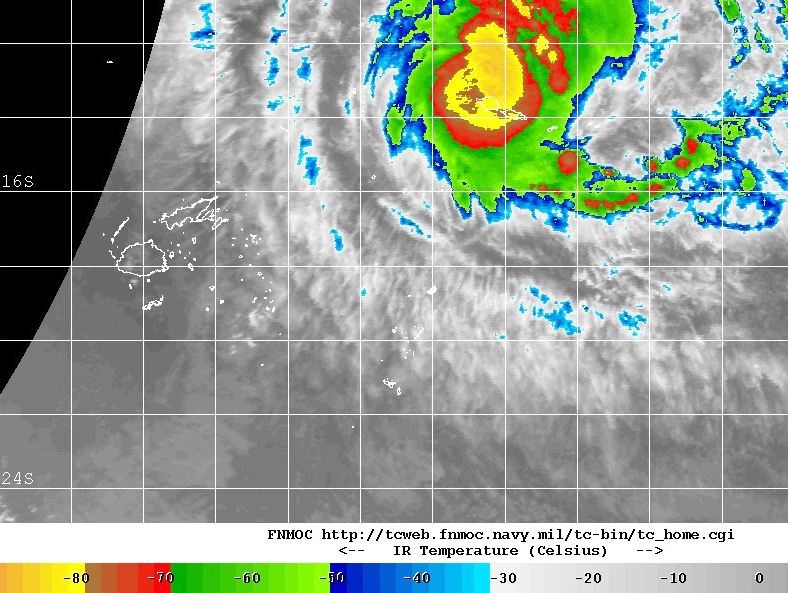
Readers will have noted that the only postings on this blog for the past few days have concerned Cyclone Evan.  Readers of the anti-Bainimarama government blogs will also have noticed that the worst  cyclone in 20 years has not even been mentioned.

As the local Fiji media report winds of over 200kph, unbelievably high seas, roads and bridged closed, no public transport in the North and West, all internal flights and some international flights closed, the loss of electric power and water, roofs whipped off houses, rising flood waters, breached sea walls and landslips,  two ships grounded in Suva harbour, two warehouses of sugar and fertilisers lost, uprooted  cassava, vudi and banana, the military on high alert to assist the emergency services, eight thousand people in 137 evacuation centres, and damage expected to greatly exceed the $300 million estimated for the cyclone damage in Samoa; in short, as the people of Fiji experience yet another massive natural disaster, the blogs that claim to be so concerned about human rights and the plight of ordinary Fijians forced to live under the barbaric, illegal government of Voqere Bainimarama, have so far chosen to ignore the event.

Instead, Coup4.5, Fiji Today and Truth for Fiji, the blog of exiled Ratu Tevita Mara, all publish the same story, the claims by exiled former FRMF Col. Baledrokadroka, that the RFMF submission to the Constitution Commission is "full of lies" , while Sai Lealea's Fiji Coup 2006 again raises the question of why Nur Bano's accountancy firm is paying the salaries of Bainimarama's  ministers.  Discombobulated Bubu's last posting was a week ago on the "untruths" of the A-G's annual conference.  And most of the other anti-blogs  — Luveni Viti, Solivakasama, Fiji Uncensored, Fiji Democracy Now — seem to have gone into hibernation.

But don't worry. They will all wake up to the cyclone soon enough as they ferret out, and revel in the shortcomings in disaster relief revealed to them by their usually reliable inside informers. 

Meanwhile, on my blog I have the usual line up of comments by the "antis" ridiculing Government's Look North policy and saying it will soon be begging Australia and New Zealand for cyclone relief. "Surely," says one of them, " it is time for Fijians to wake up and return to a real government? This useless military regime couldn't even fix a dunny." Really! The disaster preparations seem to have worked particularly well, and so far, and unlike Samoa, no deaths have been reported. 

And as a comment to Allen Lockington's Saturday posting, written and published before the cyclone hit Fiji, an inattentive anti asks why I published an "outdated and inaccurate projection chart. Don't you care about being accurate, timely and helpful?"  It is my blog that published reports on the cyclone. His anti blogs were more concerned with other issues.

Hit bad where it matters most


Fiji Times on line. Tevita Vuibau And Felix Chaudhary. Tuesday, December 18, 2012

TROPICAL cyclone Evan tore through the Western Division yesterday leaving a trail of destruction in its wake.
The tourism industry, the hardest hit by the Category Five storm, has said the damage bill to the country is expected to be exorbitant.
Fiji Hotels and Tourism Association president Dixon Seeto said with Samoa's damage bill tentatively pegged at $300million, Fiji's would be significantly more.
"When you look at the areas that were affected from Rakiraki right through to Nadi, there are a lot of factories and industries situated in these areas. And you also have to factor in the fact that Fiji has more built-up areas," he said.
Ba and Tavua special administrator Arun Prasad said early warnings had led to people taking precautionary measures and moving stock to higher ground.
Meanwhile, in Lautoka, the Western operations centre established at Churchill Park had to be relocated after the roof of the iconic stadium was blown off at the height of the cyclone.
Lautoka special administrator Praveen Bala said his team's focus was clearing debris before moves would be made to address issues with municipal council properties.
"We want to ensure that business is brought back to normal as quickly as possible and clearing our roads immediately after the storm passes will ensure this happens. Once this has happened we will start fixing our properties," he said.
When this edition went to press at 10.30pm, gale force winds were still battering the Lautoka coastline, uprooting trees and bringing down both power and telecommunications lines.
The Western operations centre was yesterday receiving calls from people in Ba and Nadi pleading for help after the roofs of their houses were blown off.
However, the Commissioner Western Commander Joeli Cawaki said teams would only be able to assist once there was a break in the weather.
Fiji's biggest sugar mill in Lautoka was not spared the wrath of TC Evan with the roof of one its storage sheds ripped apart, leaving stacks of sugar sacks at the mercy of the elements.
The South Pacific Fertilisers building suffered the same fate as ones at the Fiji Sugar Corporation grounds.

Monday, 17 December 2012

Special Weather Bulletin Monday 3:42 pm

Special Weather Bulletin Number TWENTY-FIVE FOR FIJI ON SEVERE TROPICAL CYCLONE EVAN ISSUED FROM RSMC NADI at 3:42pm on Monday the 17th of December 2012 TROPICAL CYCLONE WARNING

A HURRICANE WARNING REMAINS IN FORCE FOR YASAWA AND MAMANUCA GROUP, WEST OF THE LINE FROM BA TO SIGATOKA AND NEARBY SMALLER ISLANDS.
A STORM WARNING REMAINS IN FORCE INTERIOR OF VITI LEVU AND VATULELE. A GALE WARNING REMAINS IN FORCE FOR BUA PROVINCE, LOMAIVITI GROUP, REST OF VITI LEVU AND NEAR BY SMALLER ISLANDS, KADAVU, BEQA AND NEAR BY SMALLER ISLANDS. A STRONG WIND WARNING REMAINS IN FORCE FOR THE REST OF FIJI. A DAMAGING HEAVY SWELL WARNING REMAINS IN FORCE FOR FIJI.

SEVERE TROPICAL CYCLONE EVAN CENTRE [945HPA] CATEGORY 4 WAS LOCATED NEAR 17 DECIMAL 6 SOUTH 177 DECIMAL 2 EAST OR ABOUT 60 KM SOUTH-SOUTHEAST OF VIWA OR ABOUT 30 KM WEST-NORTHWEST OF NADI AT AND ABOUT 145 KM WEST-NORTHWEST OF SUVA AT 4PM TODAY. THE CYCLONE IS MOVING SOUTHWEST AT ABOUT 18 KM/HR.  CLOSE TO ITS CENTRE THE CYCLONE IS EXPECTED TO HAVE AVERAGE WINDS UPTO 185 KM/HR WITH MOMENTARY GUSTS TO 270 KM/HR.

ON THIS  TRACK, THE CYCLONE IS EXPECTED TO BE LOCATED ABOUT 205 KM SOUTH-SOUTHWEST OF VIWA OR ABOUT 170 KM SOUTHWEST OF NADI OR ABOUT 225 KM WEST-SOUTWEST OF SUVA AT 4AM TOMORROW AND 305 KM SOUTH-SOUTHWEST OF NADI OR ABOUT 245 KM SOUTHWEST OF KADAVU AT 4PM TOMORROW.

DESTRUCTIVE WINDS MAY BEGIN SEVERAL HOURS BEFORE THE CYCLONE CENTRE PASSES OVERHEAD OR NEARBY.

FOR YASAWA AND MAMANUCA GROUP, WEST OF THE LINE FROM BA TO SIGATOKA AND NEARBY SMALLER ISLANDS: EXPECT VERY DESTRUCTIVE HURRICANE FORCE WINDS WITH AVERAGE SPEEDS TO 185 KM/HR AND MOMENTARY GUSTS TO 270 KM/HR. HEAVY RAIN WITH SQUALLY THUNDERSTORMS.  FLOODING INCLUDING SEA FLOODING OF LOW LYING COASTAL AREAS. DAMAGING HEAVY SWELLS.

FOR THE BUA PROVINCE , THE INTERIOR OF VITI LEVU AND VATULELE: EXPECT  DESTRUCTIVE STORM FORCE WINDS WITH AVERAGE SPEEDS TO 110 KM/HR AND MOMENTARY GUSTS TO 150 KM/HR. PERIODS OF HEAVY RAIN WITH SQUALLY THUNDERSTORMS. FLOODING INCLUDING SEA FLOODING OF LOW LYING COASTAL AREAS.  DAMAGING HEAVY SWELLS.

FOR LOMAIVITI GROUP, REST OF VITI LEVU AND NEAR BY SMALLER ISLANDS, KADAVU, BEQA AND NEAR BY SMALLER ISLANDS: DAMAGING GALE FORCE WINDS WITH AVERAGE SPEEDS UP TO 80 KM/HR AND MOMENTARY GUSTS TO 110 KM/HR. PERIODS OF HEAVY RAIN  WITH SQUALLY THUNDERSTORMS WITH FLOODING OF LOW LYING AREAS. DAMAGING HEAVY SWELLS WITH SEA FLOODING OF LOW LYING COASTAL AREAS.

FOR THE REST OF FIJI: STRONG WINDS WITH AVERAGE SPEEDS TO 55 KM/HR AND MOMENTARY GUSTS TO 85 KM/HR. OCCASIONAL RAIN, HEAVY AT TIMES AND SQUALLY THUNDERSTORMS.FLOODING INCLUDING SEA FLOODING OF LOW LYING COASTAL AREAS.

The following information is provided especially for the mariners: HURRICANE FORCE WINDS AND PHENOMENAL SEAS NEAR THE CYCLONE CENTRE. STORM FORCE WINDS WITHIN 50 NAUTICAL MILES OF CENTRE AND VERY HIGH SEAS. GALE FORCE WINDS AND HIGH SEAS TO ABOUT 100 NAUTICAL MILES FROM CENTRE . ELSEWHERE, STRONG WINDS AND ROUGH TO VERY ROUGH SEAS. HEAVY SWELLS.

The next Special Weather Bulletin for Fiji on Severe Tropical Cyclone Evan will be issued at or around 07:00pm today.  

-ENDS-

Sunday, 16 December 2012

Cyclone Update Sunday 6:30 pm

Fiji News

Evan continues to move our way

19:15 Today (Sunday)

The latest track for Cyclone Evan
Taken from/By: Nadi Met Office
Report by: Indra Singh
This is a special weather bulletin number 13 issued by the Nadi Weather office on Tropical Cyclone Evan at 6.30pm.
A storm warning remains in force for Yasawa and the Mananuca Group.
A gale warning remains in force for Cikobia, Taveuni, Vanua Levu and nearby smaller islands, northern Lau and Lomaiviti Group and Viti Levu and nearby smaller islands.
A tropical cyclone alert remains in force for Kadavu and nearby smaller islands.
A strong wind warning remains in force for the rest of Fiji along with a warning for heavy swells for the entire country.
Severe Tropical Cyclone Evan, which is a category four cyclone, was located about 115km North of Cikobia and 210km North-North East of Labasa at 6pm today.
The cyclone continues to move West-South West at 25km/hr.
Close to the centre, the cyclone is expected to have average winds of up to 165km/hr with gusts of up to 230km/hr.
On the current track, Cyclone Evan is expected to be located about 90km North East of Yasawa or about 130km West North West of Labasa or about 195km North-North East of Nadi at 5am tomorrow and 150km South West of Yasawa or 100km West North West of Nadi at 5pm tomorrow.
The next Special Weather Bulletin for Fiji on Severe Tropical Cyclone
Evan will be issued at or around 08:30pm today.

Saturday, 15 December 2012

Lockington's Everyday Fiji ... Life Goes On


Two Warnings in One

The PSC is warning civil servants about the impending cyclone. That’s good.

As for the private sector, can they too warn their employees. I remember sometime in the past there was a cyclone warning out and because of torrential rain civil servants were sent home to make their homes safe, pick up their children and stock up on rations. Well, one civil servant did just that and drove to his wife’s work place (she worked in a retail store) to pick up his wife. When he got there she said the store owner said they couldn’t leave because the shop was still open. Fearing for his wife’s safety he told the store owner that all civil servants had been told to go home for safety sake.   The store owner said that his store was not the civil service and they operated differently and he was the owner.

He told the husband that if the wife was to leave, she shouldn’t bother coming back, and they did just that. How unkind can that be.  We have an impending cyclone approaching us, I hope the private sector will not be as unkind and the storekeeper I am talking about and also close shop and send employees home. They will be respected more if they comply with safety regulations.


Allen Lockington is a self-employed customs agent and business consultant who has regular articles published in Fiji. I thank Allen for permission to reprint some of them in this political blog. They remind us that life goes on, whatever the political situation. And it's good to know that.


The Need for Reforms

L-R. Fr David Arms, me, Fr Kevin Barr
By
Fr Kevin J. Barr

At the recent Attorney-General’s Conference in Natadola the Prime Minister pointed out the need to reform various laws in Fiji in order to remove long-festering problems in Fiji society. Those he mentioned were:
  • The established privilege of career politicians that foster division;
  • Elites who believe the laws do not apply to them;
  • Dishonest civil servants who take bribes to do the bidding of others;
  • Certain unionists who manipulate the law and destroy job opportunities for workers;
  • Men who resist equal rights for women.

That is fine but why be selective? What of the need for reforms to address other long-festering problems and concerns:
  • Those businessmen who colluded with those responsible for the various coups since 1987 and were never investigated?
  • The influential lobby of businessmen who, over the years, have been responsible for delaying and reducing the wage regulation orders for workers in our country and so caused deeper poverty?
  • Those who used their personal agenda against certain unionists in order to curtail the power of trade unions (which work for social and economic justice for the workers of Fiji)?
  • Those responsible for allowing certain overseas investors to ride dry-shod over environmental concerns and the interests of indigenous land owners?

The Prime Minister also spoke some fine words which deserve our support:
“It is our goal to make sure that we establish and nurture a Fiji in which justice is
actual and permanent not only legal justice, but social and economic justice that
establishes a common and equal citizentry in all aspects of life.”
This is consistent with the demand that social justice be one of the “non-negotiables” for the drawing up of the new Constitution.

We applaud this demand for social justice because social justice challenges us to provide all people with equitable opportunities and rights in a real and substantive way. This means that all people have the right to participate fully in society. Moreover social justice demands that we challenge and change the structural injustices which disadvantage and marginalize so many of our brothers and sisters. Social justice calls upon us to stand up for those whose basic rights are ignored and who live in poverty. Social justice demands that those who have more than they need should share with those who lack the basic necessities for living a decent life. Social justice challenges us to work for the good of all – the common good – and not allow a few to exploit others and monopolise the wealth and resources of the earth which God made for all. Social justice seeks a more equitable distribution of wealth, power and opportunities and urges us to fight against exploitation both of our workers and the resources of our environment.

There has been much stress on the need to do away with corruption. We also need to see equal stress on the need to control greed –whether it be corporate or individual.

Friday, 14 December 2012

Cyclone Evan is over Savai'i, Heading for Fiji

WEEKEND READING • Allen Lockington column  • The Need for Reforms by Fr Barr 

Cyclone Evan to hit Fiji by Sunday

07:46 Yesterday

Taken from/By:
Report by: Roland Koroi
The tropical depression that was affecting Fiji earlier this week has been upgraded to Tropical cyclone Evan and could hit Fiji by as early as this Sunday.
This has prompted calls for communities to be be prepared now, heed warnings, and act responsibly, to avoid unnecessary loss of lives and/or property.
A statement by the Fiji Met office last night predicted that Evan was 300km west of Apia in Samoa and could intensify and reach category 2 or storm force in the next 24 hours.
The New Zealand Herald reports that Cyclone Evan is expected to hit Samoa today with wind speeds of up to 80km/hr.
At its current track, the cyclone is predicted to make a u-turn towards the south, over Samoa, and head back towards the west, later tomorrow.
The weather office says if Evan maintains its projected track and intensity trend after leaving Samoa, it should move across the northern parts of Tonga on Saturday and arrive into the Fiji waters by Sunday, at least as a category 2.
Additionally, ahead of this cyclone, as it heads for Fiji, damaging heavy easterly swells are expected.
These can cause damages to, and sea flooding of, low-lying coastal areas.
Please note the mobile contacts of Ministry of Information officers including that of the permanent secretary that can be utilised during the weather event expected over the weekend.

Please use these contacts for clarifications, access to updates and in case of emergency.

Contact list:
Permanent Secretary Ms Sharon Smith Johns- 9905558

Acting Director of Information Prakash Narayan- 9904981

Acting Principal Information Officer Taniela Gavidi- 9905966

Senior Information Officer Viliame Tikotani- 9905850

Information Officer Bale Dolokoto- 9904440

Officer on duty- 9905965


Many thanks,
MINFO News

The Ministry of Social Welfare is advising the public to take seriously the precautions given by the National Disaster Management Office and be prepared for any natural disaster.
Minister Dr Jiko Luveni reiterated the need for parents to be mindful of the safety and well being of their children during times of natural disasters.
“It is crucial for parents and guardians as the primary care-givers to advise and ensure that right care and protection is provided to children during disasters. Our responsibility to our children extends to include our ability to be prepared for natural disasters”.
“The location of our homes, conditions of surrounding terrain and the state of drainage, our proximity to rivers and waterways, density of vegetation in our immediate vicinity should tell us whether our homes are safe in a disaster. It’s our responsibility to guide children, inform them, and provide their basic needs in order to mitigate disasters,” Dr Luveni said.
The Minister has also called on women to be proactive and prepare a checklist on items they will need during the disasters.
“We should start preparing now women in rural and urban areas are advised to please ensure that enough food, water, clothes and batteries are stored.  In case of evacuation, women should prepare enough clothes and must also have a first aid kit,” she said.
She said the Ministry’s Child Welfare Unit will work with the National Disaster Management Office (NDMO). The social welfare officers in the western and northern divisions have been trained as part of the Child Protection in Emergency (CPIE) program to strengthen their role during emergencies.
“As reported by the Nadi Met office, Tropical Cyclone Evan is due to pick up its intensity as it approaches Fiji. All Fijians are advised to please remain calm and take heed of the weather news and advice from Disaster Management Office. As a nation, we should ensure the safety and well being of those in our families and communities at all times,” Dr Luveni added.

Sunday, 9 December 2012

The 14th Attorney-General's Annual Conference

Speeches by the Prime Minister and Attorney-General


Click on the hyperlinks to access the videos of the speeches by the  Prime Minister on the Constitution Process and the Constituent Assembly (click here), and by the .the Attorney-General on the Constitution and Constitutionalism (click here).   

Saturday, 8 December 2012

How Laws are Made in Bainimarama's Fiji

By G Larson
In a fully functioning parliamentary democracy such as New Zealand new law are made by the legislature (parliament), usually on the recommendation of the executive (cabinet, that includes the Attorney-General) and enforced by the judiciary (the Courts).. The Attorney-General's office is responsible for drafting most new laws.
In Fiji, law proposals are widely circulated to stakeholders before submission to Cabinet. For example, this last week has seen the third public consultation on the new Companies Decree which will come into effect on 1st January 2013. Consultations have been ongoing for over a year and stakeholders have been able to attend public meetings as well as make written submissions.

The Media Decree is another example where wide consultations were held and submissions were received.
Public opinion or human rights?
Admittedly, there were fewer consultations on laws such as the Domestic Violence Decree or the decision to decriminalize homosexuality or allow for legal abortion. I wonder if the public would have been in favour of these law changes? Probably not.
This raises the question of whether these laws should have been made without public endorsement? Some would say no but they are are bringing Fiji into line with existing human rights conventions even if they may not have been publicly acceptable. So which is preferable? Human rights- enhancing laws brought into effect without democratic mandate? Or continue to allow women to be controlled by remaining in abusive relationships or dying as a result of village abortionists or the Police continuing to arrest and charge homosexuals for the offence of "unlawful carnal knowledge against the order of nature" because that is what the public wants?
The government has sided with the human rights view on this. Ironic, isn't it?

A point to note also is that a lot of law that is passed in NZ and Australia receives little public scrutiny. In fact some quite major changes to laws recently in NZ have been made "under urgency" thereby even further limiting public discourse and accountability by the House to the NZ public.

Of course, in any country, consultation to the wider public on every issue is not feasible unless you are Switzerland with a system that makes frequent use of direct referenda. But where possible, Fiji consults and widely amongst relevant stakeholders.


What the Judiciary Can and Cannot Do

By G. Larson

There seems to be some misunderstanding on what the judiciary can and cannot do. I'm not sure if people are being deliberately obtuse or have other motives.

The courts cannot strike down laws. So, the contention that a law cannot be reviewed by the courts is correct. It was ever thus. This is not an American system where laws can be reviewed or struck down for want of constitutionality. What appears sometimes, is that a particular person's decision under a law cannot be reviewed and is final.

Your commentator Gutter Press says the courts do not accept cases which are not subject to review. What does that mean? Of course they don't. If the particular law states that a decision is not amenable to judicial review, the courts would be overstepping their authority and interfering in the executive and legislative branches of government if they were to do so.

 Ouster clauses
These provisions are called ouster clauses, and, though not common, do also occur from time to time in other jurisdictions. For example, in the UK the Interception of Communications Act 1985 creates a Tribunal with a function to investigate and remedy complaints that postal or telegraphic communications have been unlawfully intercepted. This Act provides that the decisions of the Tribunal shall not be subject to appeal or liable to be questioned in any court. There are other examples such as in Australia under the Migration Act which restricts the ability of the courts to review decisions made by the Refugee Tribunal.

I wonder if anyone ever bothers to actually read the wording of the law before they make their claims! Gutter Press simply shows off his/her ignorance.

The courts only apply the law
You mention that decrees have been passed that cannot be questioned in law and you have a problem with that. Why? As mentioned, the decrees like other laws previously passed can never be questioned by the courts. The legislature, in this case Cabinet, passes law. The courts apply the law. The courts do not make law and the legislature and executive do not interfere with the court's decision in applying that law. Nothing to see here. No issue.

The people that claim the judiciary is not independent are the ones that need to produce the evidence.  

The State does not always win its cases.
 For example:
(1) Balu Khan charged with conspiracy to murder the PM and the AG and the Minister for Finance. This was stayed due to misfeasance of the state. Ballu was allowed to leave Fiji. No action was taken against him.
(2) Imrana Jalal and Tuisolia, - same case, stays were granted.
(3) Chaudhry - information quashed in one set of charges and another set were stayed for want of jurisdiction.
(4) Risto Harmat - the person who assisted fugitive Tevita Mara out of Fiji. The State lost the case. Harmat allowed to go.

There was absolutely no interference in any of these cases by the executive branch of government. The State lost, the courts reprimanded the State for the way in which the cases were investigated and brought before them and that is why the stays were granted. On occasion, costs are awarded against the State. This was not what the executive wanted but they accepted the decision of the courts. If this was a dictatorship and the courts were not independent, the State would have won each of those cases!

Any examples or evidence the other way?

By the way, these types of cases are a very small percentage of the number of cases that the courts see every day. Most of the cases, 98% of the cases the courts deal with concern robbery, rape, murder, defilement, incest, and other crimes. These cases are als dealt with in the fairest manner possible in the interests of justice for all.

The 2013 Budget and Social Expenditure

                        Some Reflections by Fr Kevin J. Barr

As usual there was a mixture of positives and negatives in the 2013 Budget. The business community, of course, were overjoyed with the continuation of incentives to investors and there was great hype in the media.
The allocation being given to roads and infrastructure throughout the nation (though somewhat excessive) was welcomed by most. There were many good things in the Budget but also some serious disappointments.

Provision for Basic Needs
The increased budgets for Education and Health (especially directed to rural areas) was much appreciated as was the continuation of bus fares for students and the elderly and the provision of text books.
However, one of the big disappointments was the failure to increase funding for the housing of low-income earners and the poor. Housing together with education, health care and food is one of the basic needs of the people.
In total less than $4m was allocated:

• $1m to Housing Authority to write off loans through its social housing policy;

• $1m to Public Rental Board as rental subsidy for low-income tenants;

• $1m to address the upgrading or relocation of squatter settlements;

• $600,000 to HART for construction of new homes and the maintenance of existing ones.

Mention was made of housing developments at Raiwai, Tacirua and Raiwaqa being undertaken by China Railways Group with loans from the EXIM Bank of China.
However it was not mentioned that the cost of housing in these projects will be beyond the reach of most low-income earners needing housing.

Continuing Confusions
Confusion 1- Whenever the “poor” are mentioned by government in Budgets and elsewhere it is usually in terms of those covered by the Ministry of Social Welfare. However the Ministry (even with an extended clientele covering the pension scheme for those over 70) assists only a relatively small percentage of those living below the poverty line. The Ministry assists mostly the destitute poor and not all of those living in absolute poverty.
Much is made of graduating welfare recipients “from welfare to workfare”. This is fine but many of those on welfare are not able to start small businesses and many who try ultimately fail. We need a more realistic approach.
Confusion 2 - Another confusion being propagated is that the recent changes in the taxation system and the lifting of the tax threshold will mean that all workers will take home more pay in their pockets. Yet only a few may do so. Moreover the increase in the tax threshold over the years is welcome but, of course, this has been offset by the increase in VAT and increases in food and fuel prices.

Incentives and Handouts
We often hear of the need to provide “incentives” to the business community in terms of personal and corporate tax reductions, specific allocations (such as the $23.5 m to the tourism industry), tax exemptions for machinery or materials etc. The equivalent of millions of dollars is handed out to investors and businesses in the hope of increasing economic growth.
On the other hand there is a great reluctance to provide assistance for the poorer people of our nation. They don’t deserve anything and we are told that providing “handouts” to them would only encourage laziness and a reliance on further undeserved assistance.
This unbelievable anomaly is, of course, encouraged by our current  neo-liberal economic system and its proponents among the International Financial Institutions.
Poverty is costly to a nation in terms of health care, absenteeism from work and school, and also (when poverty leads to crime) in terms of police, courts and prisons.
Money provided in terms of subsidising housing for low income earners and the poor, removing VAT from most food, increasing health-care facilities will be extremely well spent. Moreover making sure that all workers are paid wages above the poverty line will go a long way to seeing greater self-sufficiency among the poor in meeting their own basic needs.

--Republished from FLP website.

Maybe Time To Bring Fiji In From the Cold

by: Michael O'Keefe

From:The Australian December 04, 201212:00AM

LAST month a new regional organisation was born. It arrived with little fanfare, but it may very well reshape the architecture of co-operation in the South Pacific.
In early November a Fijian government press release quietly announced the creation of the Pacific Islands Development Forum. It replaces the Engaging with the Pacific process that was set up following Fiji's suspension from the Pacific Islands Forum to maintain close co-operation between island states.
What's in a name? The one word difference between the PIDF and PIF is extremely significant. It signals that the agenda of the new organisation will be firmly on Pacific island development issues, including the impact of climate change. This sharply distinguishes it from the PIF, which many regional states argue has increasingly taken on a security-dominated agenda focussed on the interests of the metropolitan powers, Australia and New Zealand.
The Pacific is deeply concerned with security, but the lens through which they look at these issues is more likely a human security than national security perspective. This is how an issue such as climate change is viewed, and the fact that the PIF has been singularly incapable of living up to regional expectations in this regard is telling. Furthermore, the most significant challenges are economic. They relate to sustainable growth and development in areas such as fisheries, agriculture, forestry and mining.
The proposed membership of the PIDF highlights the shifting Pacific seascape. The island states of the Pacific and the dependent territories of external powers are invited to attend.
The notable absentees are Australia and New Zealand, which again points to the attempt to develop and lead a new regional agenda that is distinctly Pacific. More remarkably, the PIDF will include representatives from government, business, and civil society in national delegations to encourage partnerships.
The PIDF has larger significance in relation to the architecture of regional co-operation and Australia's foreign policy toward Fiji. Turning the PIDF concept into reality will face some major hurdles. The plan is that the PIDF will be institutionalised before elections are held in Fiji in 2014. As such it will represent the final piece in Fiji's diplomatic puzzle circumventing the sanctions imposed by the ANZ partners as a result of the coup in 2006.
Sanctions are a form of punishment to try to influence the behaviour of the target country. However, in this case democracy was not swiftly restored and elections are scheduled for 2014. After an initial deferment in 2009 the election timetable has been set by the Fijian government and at this stage it is hard to imagine the possibility of holding elections sooner. The sanctions concentrated on diplomatic isolation. Fijian government officials (in particular the military) were targeted in a smart sanctions package that focused on travel bans, limits on military training and regional and international isolation, but their impact has been diluted.
In the six years since 2006 Fiji has negotiated direct flights to various regional capitals so travel through Auckland or Brisbane is no longer a necessity. Military training arrangements have been negotiated with regional states including Malaysia and China. New and enhanced bilateral relationships have been developed with countries such as Indonesia, South Korea, the United Arab Emirates, Brazil and China. Fiji has gained membership of existing groups, such as the Non-Aligned Movement, and has actively encouraged the growth of the Pacific Small Islands Developing States side grouping at the UN, the Melanesian Spearhead Group, the Engaging with the Pacific process and now the PIDF. Fiji was elected chair of the G77 for 2013 and was vice president of the general assembly in 2012. Fiji is no longer diplomatically isolated.
Now that the PIDF has been developed it may be time to look beyond 2014 and decide how Canberra's relations with Suva will be recalibrated. It may be that Fiji should be slowly and deliberately brought back in from the cold.
Constructive engagement can already be seen with the budgetary support for the elections process. The exchange of high commissioners would be another good signal that diplomacy will be undertaken at the highest levels. Allowing government officials involved in the election process to transit through Australia and NZ might be another possible thaw in relations.
The recent floods in Fiji prompted an increase in Australian aid. This could be enhanced to support sustainable development projects that fit the PIDF agenda. Furthermore, the flood damage highlighted Fiji's incapacity to deal with large-scale disaster management. The Australian Defence Force has a well-earned reputation in this regard. Niche training could be provided to the Fijian military in non-combat related skills to build local capacity to deal with environmental crises. It is also likely that the bans on Fijian participation in new peacekeeping operations will be lifted in 2014. The ADF and Australian Federal Police also have well-earned reputations in peacekeeping and peacemaking so there are many avenues for co-operation.
Another initiative that would speak to the new PIDF agenda would be to resume RAAF maritime patrol overflights of Fiji's EEZ to protect against illegal fishing.
Diplomatically there is much to be done. Is now the time? Why wait for 2014?
Michael O'Keefe is a senior lecturer in the politics and international relations program at La Trobe University
 [My copy via FijiToday for whicb my thanks. Ed.]

Engaging with Fiji: New Zealand thawing cold relations


Engaging with Fiji: New Zealand thawing cold relations – Fijian Minister Filipe Bole in New Zealand for Medical treatment.
By Thakur Ranjit Singh in his new blog Fiji Pundit

Fiji's Minister of Education, Filipe Bole, currently in New Zealand for medical treatments.
Currently Fiji’s Education Minister, Filipe Bole is reportedly in New Zealand for medical treatments. Stuff, Dominion Post newspaper’s website reported that an ailing Bole was let into New Zealand which has briefly lifted its ban on politicians involved in the military rule of Fiji to allow an ailing minister into the country. [Strangely the full story from the website appeared to have been removed.]
The Stuff seems to have got its signals wrong because it is not a brief lifting of sanctions but appears to be a systematic thawing of cold relations that had existed between the two neighbours. This is not the first time Bole was allowed into New Zealand. Previously, he attended an Oceania Football Confederation (OFC) ministerial meeting in Manukau, Auckland on 22 March, 2010. It was then hailed as a very promising sign.
It is evident that Bole’s treatment in New Zealand was a result of the July high-level meeting in Sydney of Australian, Fijian and New Zealand foreign ministers, which signaled a thawing of diplomatic relations. This included reappointing high commissioners by all three countries and easing by Australia and New Zealand of some travel sanctions on members of the Government.
It appears the change in heart was initiated at the 2010 Natadola meeting in Fiji.
When engaging meeting at Natadola in Fiji was held on 22 and 23 July, 2010 and an overwhelming support for Fiji was shown by Pacific countries, some doomsday pundit had their day. One was Kiwi journalist Michael Field, a supposed expert of Pacific issues, now banned from Fiji. He said the following:  

“Natadola and its communiqué will quickly fade away. It was nothing but an ego fest for one man.”
Fiji's Prime Minister, Frank Bainimarama
By that one man, he meant Fiji’s Prime Minister, Frank Bainimarama. Three years ago, I had predicted this small engaging meeting was to grow great. So it did. History is a testimony to the fact that most big things today had a humble, in fact, some, very insignificant beginnings. Whether it is the genesis of Colonel’s Sander’s KFC (Kentucky Fried Chicken), the Mc Donald’s, the World Disney or, the formation of United Nations which replaced the League of Nations and so on. Perhaps the coming generation may view the Natadola Fiji Engaging meeting in a similar manner.
Certain sections of the Communiqué that resulted from that meeting revealed that the island countries which attended the meeting showed an understanding, and perhaps an acceptance and appreciation of Fiji situation. What one could deduce out of those communiqué was an expression that the system under which Fiji had been governed was a failure and there was a need to substitute the old imported system with a home-grown one. It was also recognised that the development process in Fiji which was trying to implement changes conducive to its current level of developments and other environmental factors, was to be a lesson to  other countries on how they could implement changes that suited them. With a strategic and leadership position that Fiji occupies in the Pacific, it could not be ignored by the other sections of the Pacific community. Australia and New Zealand had boycotted that engaging meeting. But it now appears that what started in Natadola in some small way has borne fruit and encouraged fruitful talks with both Australia and New Zealand which has seen Bole in Auckland and other behind the scene developments.

We must commend New Zealand government, in particular its Foreign Affairs Minister, Murray McCully, and the National government’s pragmatic changing policy towards a past neighbour and close ally.

New Zealand's Foreign Affairs Minister, Murray McCully -pragmatic action in engaging with Fiji
 Good positive steps, keep it up, McCully, well done and much appreciated. Wish a quick recovery for Minister Filipe Bole. Get well soon.


Friday, 7 December 2012

News and Comments Friday 7 December 2012

WEEKEND READING.  •  Engaging with Fiji by Thakur Ranjit Singh • The 2013 Budget and Social Expenditure by Fr Kevin Barr   •  Maybe Time to Bring Fiji in from the Cold by Michael O'Keefe  • What the Judiciary Can and Cannot Do by G. Larson • How Laws are Made in Bainimarama's Fiji by G Larson.

CCF VIDEO LAUNCH. The Citizens' Constitutional Forum will launch its "Our Voice, Our Future, Our Constitution," its  documentary video, on Monday.

REPORT ON PUBLIC MEETING ON CONSTITUENT ASSEMBLY. Click here   and  here.

CORRUPTION: FICAC urges people who have been victims of corruption or white collar crime to speak up and report the issue to the authorities. Fiji is only one of three countries in the South Pacific to have ratified the UN’s Convention against Corruption.

PACIFIC ISLANDERS QUESTION NZ's WITHDRAWN FROM KYOTO COMMITMENT.
Representatives of the Alliance of Small Island States’ (AOSIS) met with the New Zealand delegation at the Doha round of climate talks to discuss ways to secure agreement on a second phase of the Kyoto Protocol.

This was confirmed from Doha yesterday by the Minister for Foreign Affairs and International Cooperation, Ratu Inoke Kubuabola. He said that the Pacific Islands neighbour, New Zealand, had last month declared its intention not to be part of the Kyoto Protocol’s second commitment period.
“For Fiji and member countries of AOSIS, establishing a second commitment period to the Protocol is considered crucial in the fight against runaway climate change,” Ratu Inoke said.

The AOSIS delegation was led by Nauru, as chair of the negotiating bloc, to hear reasons behind New Zealand’s decision not to enter into another commitment period.

PLANTING CORAL. A unique opportunity has started in the North where three villages in Druadrua Island are going to plant coral that will be marketed overseas by Walt Smith International (Fiji) Ltd. Company director Walt Smith says they will invest in these villages by providing all necessary equipment and training. Mr Smith and wife Deborah were the first to undertake commercial coral farming back in 1998 in the Yasawas. Since then more than 16 countries worldwide have followed suit.

MECHANISED CANE CUTTING COULD BE THE WAY TO GO.
South Pacific Fertilisers chairman John May’s vision to mechanise the sugar industry and end the hand-cutting cane era, now lies in the hands of the Fiji Sugar Corporation (FSC) board.

Mr May, who recently was in North Queensland, to look for surplus mechanical cane harvestershas submitted his findings to the FSC board. [The purchase of Aussie secondhand machinery has been criticised in the anti-goverrment blogs but they have made no suggestions on how to overcome the labour shortage problem and increase productivity.]

Official Release on Constituent Assembly

MEDIA RELEASE:  PM SAYS CONSTITUENT ASSEMBLY MEMBERS MUST HAVE WIDESPREAD COMMUNITY SUPPORT

The Prime Minister, Voreqe Bainimarama, says the Constituent Assembly, he will appoint to review the new Constitution, will represent the broadest possible cross section of Fijian society.

But he stressed that its members will first need to demonstrate that they represent a significant constituency in the country.

Speaking at the opening of the 14th  annual Attorney-Generals Conference at Natadola, the Prime Minister said Fijians could not allow a narrow band of elite to again determine the country’s future, as had happened with previous constitutions.

“We have already had a handful of men determine what our constitution would be after independence, we have already had the 1990 Constitution imposed with almost no consultation at all, and we have already had the key recommendations of the Reeves Commission overturned by a joint parliamentary select committee. This will not happen again”, he said.

The Prime Minister said the Constitutional Commission had traveled the length and breadth of the country to receive submissions from Fijians on their views of what should be included in the Constitution. Through this process, the views and opinions of Fijians who had been marginalised and sidelined in the past had been given a voice.

“Once completed, the draft constitution will be submitted to the President, who will then refer it to the Constituent Assembly to review and make any amendments it believes are appropriate.”

“The Constituent Assembly will consist of the broadest possible cross-section of Fijian society, as set out in the relevant decree. But to qualify as members of the Constituent Assembly, individuals and organisations will need to demonstrate that they represent a significant constituency in the country. They must also be guided by a commitment to the interests of the nation and the Fijian people as a whole”, the Prime Minister added.

-END-
.

Wednesday, 5 December 2012

News and Comments Wednesday 5 December 2012

REMINDER. TONIGHT IN SUVA. DECEMBER 5th. Public lecture on “The Nature of a Constituent Assembly” hosted by CCF, in partnership with the FWRM and USP’s School of Government, Development and International Affairs. Speaker: Renowned constitutional expert Professor Cheryl Saunders, University of Melbourne. Venue and time: Lali Room, Holiday Inn, 6:00pm.

HOW INDEPENDENT IS THE JUDICIARY? Gutter Press made this comment on last Wednesday's News and Comments:

Crosbie, your confidence that Fiji's judiciary does not bow to state pressure is not only misplaced, it is demonstrably wrong. The judiciary does not accept cases pertaining to any decree which has been deemed by the regime to not be subject to review. As such it bows to state pressure in the most obsequious way Whilst I accept that misuse does not remove use, in the case of the judiciary it’s also a matter of ‘by their fruits shall ye know them’.

I replied: @ Gutter press. This is a hard one. The job of any judiciary is to uphold the law. It does not write the law and it has no powers to change the law. In Fiji, decrees have been passed that cannot be questioned in law. You and I have problems with this. All laws should to open to review, and people should also be able to appeal against the law. But this is not always the case in Fiji at the moment. I would expect these restrictions to be removed after the 2014 elections and the reinstatement of Parliament.

My claim that the judiciary does not bow to state pressure is based on what happens when cases are brought before the judiciary. There, I see no evidence that the judiciary has acted in anyway different from other judiciaries, and I note that a number of judicial decisions have gone against the State. This suggests that, within what is possible, the judiciary is acting independently and responsibly, and is not bowing to pressure from government.

THE QUEEN'S HEAD.
The decision to remove images of the Queen from Fiji's currency has been met with outrage from the country's chiefs.   Comment.  The reaction was predictably, not just among chiefs but also among ordinary people. Who on earth advised government on this one?

NEW JOBS IN SIGATOKA. Some 30 new shops employing about 150 people have opened in Sigatoka this year. The increase is mainly a "downstream" product of the tourism industry.

ANOTHER SQUATTER UPGRADE. More than 20 Kalekana, Lami, families will soon have proper sanitation as the groundbreaking ceremony of Kalekana Settlement upgrading took place today.  The $80,000 upgrade, that  will be a cooperative effort involving government, the Lami Town Council and the Asian Coalition of Housing Rights, is  expected to be completed next year.

YOUTHS PARTICIPATE IN INTERNATIONAL VOLUNTEER DAY.
   Click here.

CLIMATE CHANGE: FIJI SAYS DEVELOPING COUNTRIES  MUST LEAD THE WAY.
 Fiji urges developed countries to provide climate change financial resources. Developed countries must provide scaled up, new, predictable and adequate financial resources to avoid a gap in their funding of adaptation and mitigation activities in developing countries, the Fijian government said on Sunday.

Monday, 3 December 2012

Fiji Government Statement on PACP and PI Forum


The Prime Minister, Voreqe Bainimarama, has reaffirmed the Pacific ACP's [PACP] independence from the Pacific Islands Forum after a Special Leaders Meeting held in Port Moresby last month.

The Prime Minister expressed Fiji's belief that the Pacific Islands Forum Secretariat has misrepresented a key decision made at this meeting regarding the relationship between it and the PACP.

The outcomes document released by the Forum Secretariat reported that Papua New Guinea [PNG] will host a secretariat for PACP Leaders meetings only, and that the Forum Secretariat will continue its duties for other PACP activities and meetings.

The Prime Minister said that it is Fiji's position that this is a misreporting of the decision taken at last month's Special Leaders Meeting.

"It is our understanding that the PACP Leaders decided that there would be a complete separation between the Forum Secretariat and the PACP," the Prime Minister said. "PNG offered to host and fund a full PACP Secretariat, until
2014, which will be responsible for all PACP related matters and activities."

The Prime Minister added that this decision was made in large part to facilitate Fiji's full and regularised participation in PACP meetings, at all levels.

"In their capacity as the secretariat for the PACP, the Forum Secretariat had the responsibility to equally serve all PACP members. By refusing to include Fiji in meetings that we were fully entitled to attend, the Forum Secretariat was not only violating Fiji's rights, but was also upholding an increasingly irrelevant policy of isolation."

"Last month, Fiji successfully chaired the ACP Ministerial Trade Committee Meeting and co-chaired the EU-ACP Joint-Ministerial Trade Committee Meeting, held in Brussels. And in 2013, Fiji will act as chair of both the G77 plus China at the United Nations, as well as the chair of the International Sugar Council. We take our international obligations very seriously, and are honoured by the trust andsupport the international community, including the members of the PACP, hasshown Fiji."

The Prime Minister has written to the current Chair of the PACP, Cook Islands Prime Minister Henry Puna, and also to the host of the new PACP Secretariat, PNG Prime Minister Peter O'Neill, to request that the Forum
Secretariat correct this misrepresentation in the Leaders outcomes document.

News and Comments Monday 3 December 2012

Art by Takashi Murakami
WHAT IS A CONSTITUENT ASSEMBLY? MEETING ON WEDNESDAY. Educating the public on different aspects of the democratic process is vital. The freedom to vote in an election is not enough if people do not know what they are voting for. Similarly, a new constitution should help Fiji to become a more robust democracy but only if people understand what a democratic constitution should look like.
  This will be the job of the Constituent Assembly as it considers the draft constitution recommended to it by the Constitution Commission. Wednesday's public meeting in Suva, announced below, is part of the educational process.

"As we eagerly await the appointment of Fiji’s first Constituent Assembly in January 2013, the Citizens’ Constitutional Forum, in partnership with the Fiji Women’s Rights Movement and USP’s School of Government, Development and International Affairs will be hosting a public lecture on December 5th, 2012 on the theme “The Nature of a Constituent Assembly”.

"Renowned constitutional expert Professor Cheryl Saunders has been invited to deliver the lecture based on her expertise in the field of constitution making. Professor Saunders, who is a Laureate Professor at the University of Melbourne and the founding director of its Centre for Comparative Constitutional Studies, will give an overview of the nature of such an institution, the various mechanisms in place and the universal guiding principles which determine the composition and conduct of a Constituent Assembly.

"CCF CEO Reverend Akuila Yabaki says the Constituent Assembly will be tasked to deliberate on the draft Constitution, formulated by the Constitution Commission following the nationwide consultations and there is a need to encourage discussion and raise awareness on the importance of and the roles and functions of a Constituent Assembly."

WHY RE-PUBLISH A "STUPID" ARTICLE FijiToday heads a posting "Long Live King Frank" and then says it doesn't think "even Frank is this stupid." Why then republish the stupid article by Jonathan Pearlman of the Sydney Telegraph that states in its heading, "Fiji to replace Queen on currency with military dictator." There was absolutely nothing in the Reserve Bank release on the new coinage to justify this assertion. It is simply a deliberately misleading lie.  [For the record, Fiji must be the only Commonwealth country to profile the Queen on its currency 25 years after it became a republic. Fiji became a republic in 1987.]

MONOSAVU COMPLAINTS INVESTIGATED.
The anti-government blog Fiji Democracy Now claims landowner discontent over inadequate compensation for the construction of the Monasavu Dam and the Wailoa Pumping station was a major cause of the Speight Coup. I doubt it.  But government is now investigating the landowners' claim. Fiji Broadcasting News first brought the issue to light and after months of following it, the PM's Permanent Secretary Col. Pio Tikoduadua has  met with representatives from the seven yavusa (clans) involved to listen to their complaints that have not been listened to since the dam and pumping station were commissioned over 20 years ago.  For a different approach, read here
on how landowners were consulted on the construction of the Nadarivatu dam which was commissioned earlier this year.

VAT REFUNDS TO HOME OWNERS.The Value Added Tax refund signalled in the 2013 Budget will benefit thousands of people and create employment. People who own land and build a new house valued at under $120,000 in the new year will be refunded up to $120,000.  The refund can be used to reduce their mortgage, help pay for their children’s education or put it into a savings account.The VAT refund is timely as the lots at Tacirua East Stage 2, Wainibuku and Waila city are scheduled for sale in 2013.

BUDGET TAX INCENTIVES ATTRACT BUSINESS.A major financial institution has plans to move its regional head office to Fiji soon as a result of the 17% corporate tax cap announced in the 2013 Budget. The Attorney-General said the philosophy behind this incentive is to encourage private sector growth and development by withdrawing Government from areas where the private sector can do a lot better. At the same time Government is focusing its efforts on areas that needs it whether it be welfare, infrastructure development or providing a facilitating environment. For more details on the A-G's address click here. 


FIJI CHAIR SUGAR ORGANIZATION. PM Bainimarama  was unanimously elected the Chairman of the International Sugar Organization at the organization's 21st seminar in London last week.  Fiji will host the ISO's 22nd seminar next year.

HIV/AIDS: "WE KNOW WHAT WORKS..." The President and HIV & AIDS Ambassador Ratu Epeli Nailatikau led a World Aids Day march in Suva on Saturday that included over 20 organisations including Youth Network, Key Affected Population Network, and the Persons Living with HIV network. Speaking after the march, the President said, “We still need to upscale what we see is working and bring in new innovative ideas that we know can work. The thing about HIV advocacy is that we already know what works and what does not work. The statistics reveal that we in Fiji must strengthen our campaign towards zero new HIV infections, a challenging goal that demands smart thinking, strategic planning including the up-scaling of HIV and Sexually Transmitted Infections (STI) services and preventative measures, and most definitely an increase in funding, among others.”

Despite the increasing cases, results show that more people are more open towards HIV/AIDS testing which demonstrates the positive outcomes of campaigns and awareness programmes. His Excellency called on all Fijians to be more responsive towards HIV/AIDS. The four priority areas on HIV/AIDS in the National Strategic Plan include are: the prevention of HIV and STI transmission, continuation of care, governance and co-ordination and monitoring, evaluation and research.

NZ LIFTS "SMART" SANCTION. The sanctions against members of the Fiji regime were temporarily lifted last week to allow the Education Minister Filipe Bole (76) into the country after he suffered a severe heart attack. The sanctions ban people associated with the regime and their families from entering New Zealand and Australia.

Saturday, 1 December 2012

Lockington's Everyday Fiji ... Life Goes On


 Burglar Alarm

During one of my visits to farmers I went into a settlement in Lautoka which is about five minutes drive towards the sea from the main road in Natabua Lautoka. The   little tin shack is made of flattened 44 gallon drums.  The home sits right in the middle of a vegetable and cassava plantation. 

After handing over farm implements I asked the owner if I could have a look around his compound. We came to a waist high fence that had empty tuna cans tied neatly together at various intervals. When I asked what they were for the owner said, “Qori noqu burglar alarm.” 

He went on to say that because he lives in such an isolated place his home often gets burgled. I am amazed that his home gets burgled because he is a squatter and lives in dire poverty. His home is bare and the roof leaks, yet people still rob him. 

How cruel can that be!

But the empty tuna cans is an ingenious device and he said that it has alerted his family many times when people try to climb over and the tins rattle.


Allen Lockington is a self-employed customs agent and business consultant who has regular articles published in Fiji. I thank Allen for permission to reprint some of them in this political blog. They remind us that life goes on, whatever the political situation. And it's good to know that.

Temporary Folly

                                                            By Dr Sudarsan Kant*

The recent series of vignettes on the principal actors in Fiji’s constitutional drama by Dr. Walsh is a noteworthy reminder of how high the stakes are regarding the future of the country we love and deeply care about. We should be grateful for the yeoman work he is doing in helping us untangle some of the strands in the story thus far and hope that in due time, a clearer picture will emerge for the way forward. It is tempting to jettison the national project of building a better constitution because of current disagreements, but that would be a grave mistake and I concur with  him that this is a temporary wrinkle between men of goodwill and ought to be resolved for the sake of the nation.

A distressing feature of politics in Fiji is the notion that politics is always a zero-sum game and therefore pursued via a scorched-earth policy often to the detriment of society. The current standoff involving the Prime Minister, the Chairman of the Constitution Commission and the former Vice President demonstrates how difficult it is to pursue a different political orientation in the face of seemingly intractable disagreements. However dissent over substantial questions regarding the proper ordering of society provides an opportunity for transparent deliberation over issues that will impact so many lives for years to come and disagreements even over deeply held views ought not to become an immutable obstacle towards forging consensus on areas of substantial agreements. Unfortunately as is often the case in Fiji, political leadership out of exiguous self-interest choses to define political disagreements as irreconcilable differences reflecting insoluble interests rather than the divergent worldviews of a pluralistic society whose members nonetheless may share many common goals and aspirations.

When politics is consistently interpreted as referendum on absolute differences, than it is logical to pursue the politics of estrangement with the opposing side of an argument and policy disagreements thus become an existential struggle. Consequently the ensuing political stalemate impedes society from forging ahead socially, economically and culturally as has been the case in Fiji these many years.

If politics on the other hand is understood as a rational mechanism for solving collective problems in a pluralistic society, than differences of worldviews and interests demand negotiation and compromise. One is willing and able to concede legitimacy to the views and aspirations of peoples who may not share your views and values, not because you agree with them but that they have as much a stake in society as you do.

All three of these men are persons of goodwill and each of them represents a legitimate perspective. The Prime Minister has made it abundantly clear that the constitution should be an inclusive document representing all the communities in Fiji. Some of the submissions to the Constitutional Commission have not exactly hewed to the principles of inclusion which is quite disappointing.

The Chairman within the purview of his scholarly expertise has justifiably argued for intellectual freedom in the prosecution of his chartered responsibilities and one can understand the frustration he feels about the exogenous limits that have been imposed in this project.

Finally, the former Vice President as a leader of the itaukei speaks sotto voce of the fears and longings of his people who like the rest of us are trying our best to make sense of this world we live in.

The call of leadership requires prudence, fairness and generosity of spirit and we hope that the current difficulty is a temporary setback and that good sense and wisdom will prevail for all of our sake.


* Assistant Professor of Political Science
Harris-Stowe State University
St. Louis, Missouri
USA